
IB vs IGCSE Maths Difficulty: 9 Key Differences Parents Must Understand
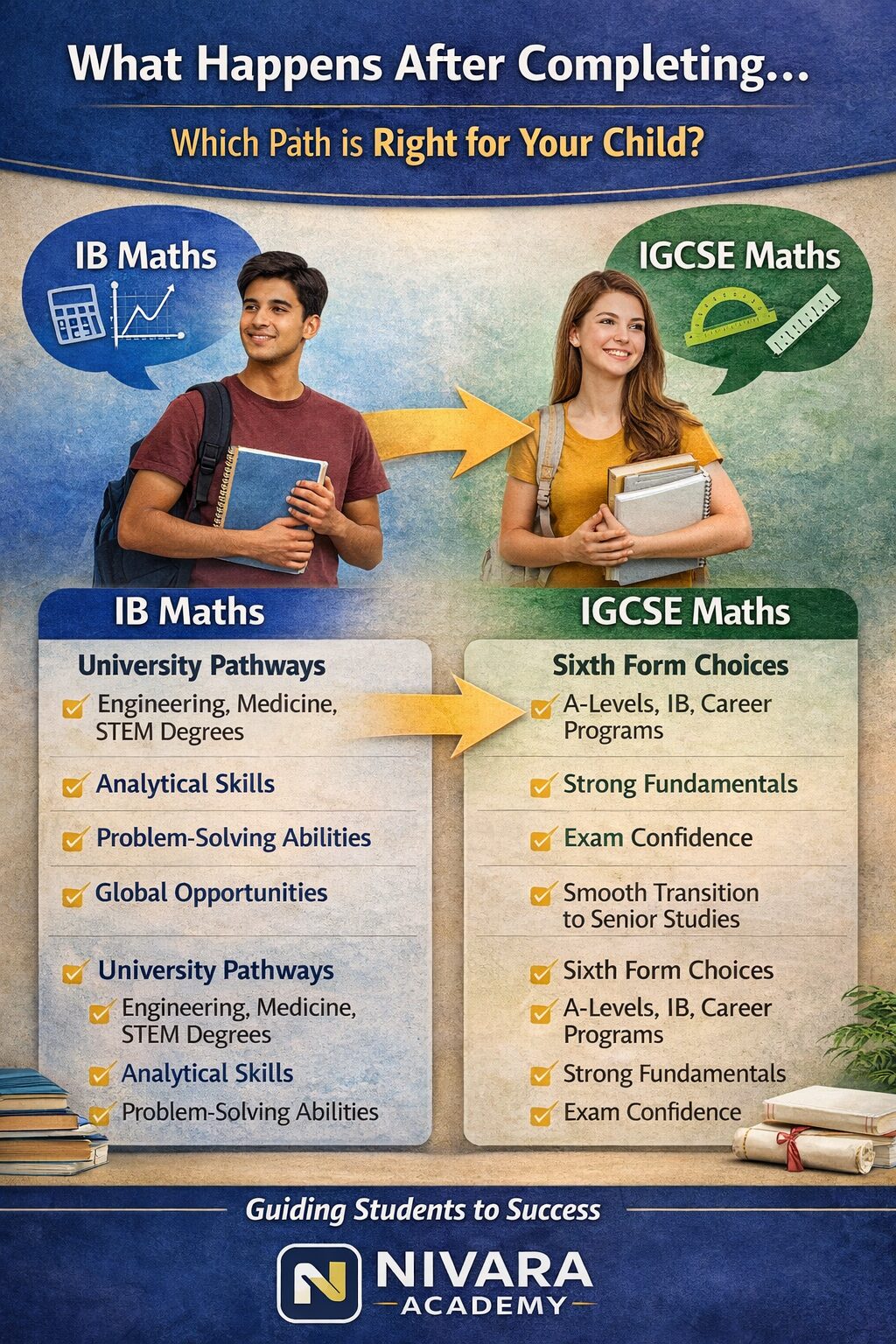
Parents often ask whether IB Maths difficulty is significantly higher than IGCSE Maths. While both are respected international curricula, they differ greatly in how students learn, practise, and are assessed.
Understanding these differences early helps parents avoid curriculum mismatch, academic stress, and unnecessary pressure on their child. Below are the 9 key differences explained clearly and honestly.
IB vs IGCSE Maths Difficulty: 9 Key Differences Explained
| Difference Area | IB Maths | IGCSE Maths |
|---|---|---|
| 1. Learning Approach | Conceptual, analytical, and reasoning-based | Procedural, structured, and method-focused |
| 2. Syllabus Depth | Deeper exploration of fewer topics | Broader coverage with predictable content |
| 3. Exam Style | Unfamiliar questions requiring interpretation | Familiar formats with repeated question types |
| 4. Workload Pattern | Consistent effort over two years | Heavier focus near exam periods |
| 5. Calculator Usage | Integrated but concept-driven | Limited and exam-dependent |
| 6. Assessment Style | Exams plus internal assessment | Primarily final examinations |
| 7. Stress Experience | Steady academic pressure | Short-term exam pressure |
| 8. Skill Development | Critical thinking and problem-solving | Accuracy and exam technique |
| 9. University Preparation | Strong preparation for analytical degrees | Strong foundation for pre-university study |
Which Curriculum Feels Harder for Most Students?
For many students, IB Maths feels harder because it requires continuous engagement and deeper understanding. Students cannot rely on memorisation alone.
IGCSE Maths often feels more manageable for students who prefer clear instructions, repetition, and exam-focused preparation.
Final Advice for Parents
There is no universally better or harder curriculum. The right choice depends on learning style, emotional readiness, and long-term academic goals.